Skip Navigation or Skip to Content
Search icon
Light mode icon
Dark mode icon

Technology & CRM Architecture Solutions

built for financial services.

We design the technology and CRM architecture that sits underneath your revenue function. Platform-agnostic architecture work that decides what gets built before anyone starts building - data models, integration architecture, system selection, governance design and transition roadmaps, engineered against the regulatory perimeter Financial Services and FinTech firms actually operate inside. The architectural discipline that decides whether your next CRM scales with the business for the next decade, or gets replaced again in 24 months.
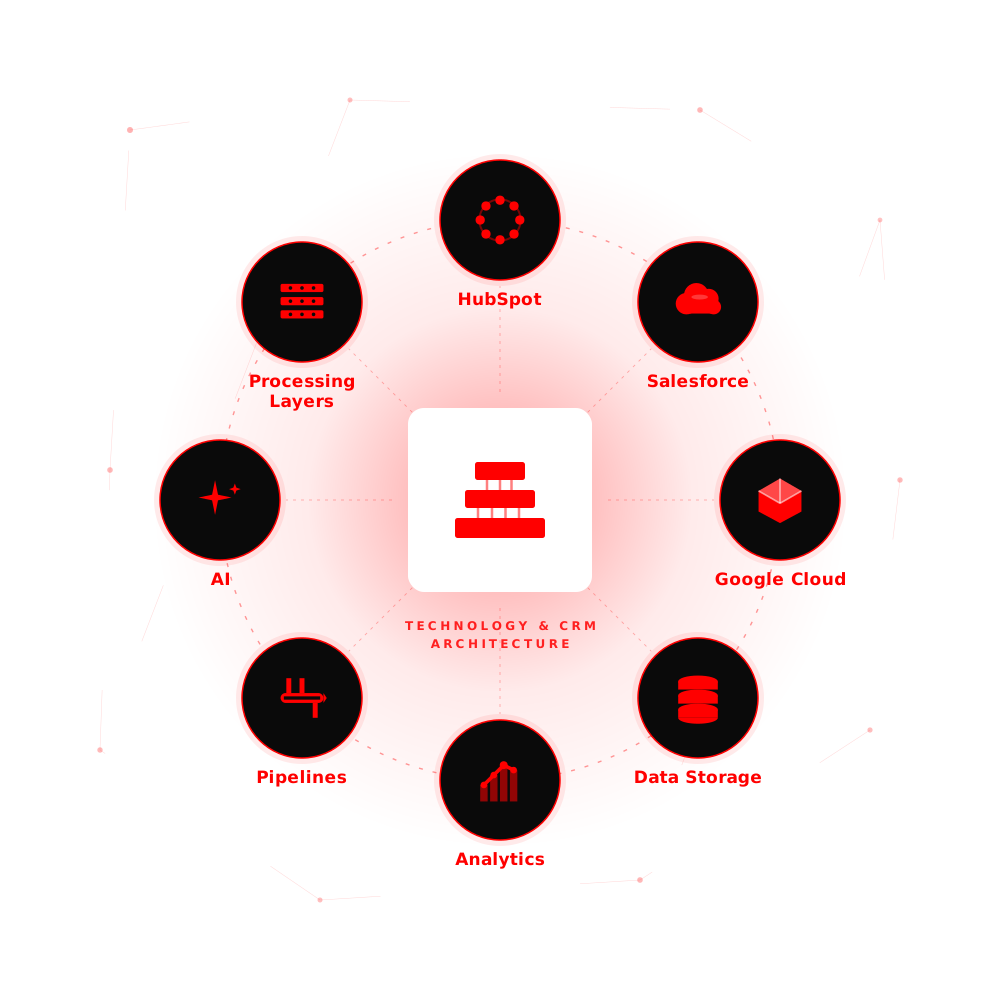

evara-tech-crm-arch-hero

TRUSTED BY LEADING FINANCIAL SERVICES BUSINESSES

  • MoneyCorp
  • Monavate
  • YouLend
  • Yaspa
  • Iwoca
  • Yonder
  • Caxton
  • AAB
  • MoneyCorp
  • Monavate
  • YouLend
  • Yaspa
  • Iwoca
  • Yonder
  • Caxton
  • AAB

The challenge

Most CRM and technology investments begin with the wrong question.

Most CRM programmes start with platform selection: Salesforce or HubSpot or Microsoft Dynamics. The data model gets retrofitted around the platform's defaults. The integration approach is whatever the platform's native connectors allow. The governance framework is borrowed from the previous CRM that nobody trusts anymore. The result is a system running the platform's standard model rather than the business's actual model, with rework cycles, compliance gaps, integration debt and an adoption story that quietly underperforms. The alternative is architecture-first thinking. Decide the data model your business actually needs. Decide the integration architecture your stack actually requires. Decide the governance framework your sub-vertical regulation actually demands. Then select the platform that supports the architecture you have designed, rather than designing the architecture around whatever platform marketing convinced you to buy.

What you get

  • Architecture first, platform second

    Sales playbooks designed against your sub-sector buyer journey, not against generic B2B templates. Content libraries built around the conversations reps are actually having, audited against the conversations they should be having. Compliance-aware content that survives review the first time, not the third.

  • Data architecture engineered for FinServ

    Customer data models designed against the multi-entity, multi-product, multi-jurisdiction reality FinServ firms operate inside. Compliance-aware structures designed for FCA returns, audit trail discipline and sub-sector reporting from day one. The data architecture leadership can defend in front of regulators and auditors.

  • Documented, scalable, audit-ready

    Architecture documentation produced as a deliverable, not as an afterthought. System inventory, data dictionary, integration map, governance framework and audit trail design, all maintained as living artefacts that grow with the business. The documentation FCA, SMCR and internal audit functions actually need.

  • Transition roadmaps that work

    Phased implementation roadmaps designed against your operational reality, not against an ideal-world transition plan. Sequencing that protects revenue continuity during platform change. Stage gates with documented success criteria. The roadmap leadership can commit to in front of the board.

Our approach

How we deliver Technology & CRM Architecture Consultancy

We deliver architecture as a structured engagement that runs from current-state audit through to a living architectural framework that evolves with the business. Every phase is platform-agnostic, FinServ-specialist and designed against the regulatory perimeter your business actually operates inside.

  1. Audit current architecture and gather requirements

    Full audit of the current technology footprint covering data architecture, integration patterns, system inventory, platform dependencies and governance maturity. Business requirements gathering across executive, operational and compliance audiences. Strategic alignment workshops mapping the architecture work against business objectives, regulatory requirements and growth trajectory. Output: a current-state architecture report with prioritised gaps and a clear baseline against which target-state design proceeds.

  2. Design target architecture and recommend platforms

    Target-state architecture design covering data architecture, integration architecture, system inventory and platform recommendations. Comparative platform analysis across HubSpot, Salesforce, Microsoft Dynamics, Pipedrive, Zoho or other relevant options against your specific architectural requirements. Governance framework design covering data ownership, access control, audit trail and change control. AI and automation architecture design where applicable, sequenced against the AI strategy roadmap.

    300+ systems designed and deployed. 20+ platforms supported. ISO 27001 and ISO 9001 certified delivery.

  3. Document, validate and roadmap

    Architecture documentation produced as a deliverable: architecture diagrams, data dictionary, integration map, governance framework, system inventory and audit trail design. Architecture validated against business requirements, regulatory perimeter and operational realities through stakeholder review cycles. Phased transition roadmap built with stage gates, success criteria and revenue continuity planning. Risk register maintained throughout.

  4. Govern, support transition and evolve architecture

    Architecture governance framework operational from cutover, with ongoing change control discipline. Transition support during platform implementation phases. Architecture review cadence (typically quarterly) to ensure the design evolves with the business. The architecture becomes a living asset informing every subsequent technology decision, not a one-off deliverable that ossifies as soon as the consultants leave.

GTM-Strategy-for-financial-services-fintech (1)

See how Evara aproaches HubSpot Services

Technology & CRM Architecture is part of the broader Growth Revenue Engine: Evara's integrated framework for scalable financial services growth.

CASE STUDIES

Results that speak for
FinTech and Financial Services.

  • 100%

    alignment between marketing and sales

    The integrated solution automated lead flow into Salesforce, improved segmentation and assignment, enabled instant Slack notifications, and ultimately streamlined Doctify’s operations while strengthening efficiency and alignment across the organisation.

  • 200K+

    contact records migrated

    Pusher migrated from Salesforce to HubSpot in under 6 weeks, with all data intact, effective integrations, and a smooth transition. The Sales team was empowered with full visibility over the sales funnel, enabling accurate forecasting and performance measurement.

Ready to see how Technology & CRM Architecture would work for your business?

No obligation. Response within 1 business day.

All our marketing efforts can now be tied into one campaign, which helps us analyse performance effectively. The buyer persona-based approach helps us customise messaging to what is most relevant. This improves conversion rates and results in more MQLs and SQLs for the Sales Team.

Showing 1 of 3

Increase in revenue within three months of implementation

Sales team expansion enabled by automation efficiencies

Increase in content engagement across the platform

FREQUENTLY ASKED QUESTIONS

Common questions about Technology & CRM Architecture

CRM architecture is the structural design of the CRM and surrounding technology that determines how customer data is modelled, how systems integrate, how governance operates and how the entire revenue technology stack scales as the business grows. CRM architecture consulting covers the design discipline that produces this structure: current-state audit, target-state architecture design, platform selection, data architecture, integration architecture, governance framework design and transition roadmapping. For Financial Services and FinTech firms, CRM architecture sits inside the broader discipline of enterprise technology architecture consulting, with sub-sector requirements that generic CRM consulting does not design for — regulatory reporting overlays, audit trail discipline, multi-entity data structures, sub-vertical compliance perimeters and the long-term cost of platform mistakes that take years to surface.

Architecture-first thinking matters more in Financial Services than in most sectors because of three structural factors. First, regulatory exposure compounds — a CRM architecture that does not design for FCA returns, audit trail discipline and Consumer Duty obligations from day one builds compliance debt that surfaces years later in regulator examinations and audit findings. Second, switching costs are unusually high- a FinServ firm rarely replaces a CRM more than once a decade because the data migration, integration rework and adoption disruption are too painful to repeat, which means the architecture decision has to be right the first time. Third, the technology stack itself is unusually complex - most FinServ firms operate across CRM, marketing automation, finance systems, regulatory reporting platforms, sub-sector-specific platforms (insurance policy systems, banking core, asset management mandate platforms) and a long tail of internal tooling, which means the integration architecture matters more than the platform brand on the front end.

The three terms overlap but emphasise different parts of the same discipline. CRM architecture is specifically about the CRM and its directly connected systems: data model, customer object structure, sales and marketing process design, automation patterns and the integrations that feed it. Technology architecture is the broader discipline covering every system in the business technology footprint, of which the CRM is one component. Integration architecture is the sub-discipline focused specifically on how systems exchange data: APIs, middleware, event buses, ETL patterns, data warehousing and the orchestration layer that holds the architecture together. CRM ERP integration architecture is a specific cross-section of the three, addressing how the CRM exchanges customer, contract and financial data with the ERP, a frequent pain point in mid-market and enterprise FinServ firms running both. We deliver all three as connected disciplines in a single architecture engagement.

The three Technology practices serve different points in the technology lifecycle. Technology & CRM Architecture is the design discipline: deciding what the technology should look like, which platform supports the architecture and how the stack fits together. The deliverables are architecture diagrams, data models, platform recommendations, governance frameworks and roadmaps. HubSpot Services is the platform-specific build work that follows architecture: configuring HubSpot, building custom objects, designing workflows and operating the platform once it is live. Platforms Migration & Integration is the execution work that connects systems and migrates data between them, the integration architecture from the design phase becoming a live, working data flow. Most clients engage with this page upstream of the other two. Architecture decides what gets built. HubSpot Services and Platforms M&I build it.

CRM architecture for multi-entity Financial Services firms - groups operating across multiple legal entities, multiple jurisdictions, multiple regulated sub-businesses or multiple brands - adds layers of complexity that single-entity architectures do not. Data architecture has to design for cross-entity customer relationships (the same client across multiple legal entities or product lines), regulatory perimeter (which entity owns which regulated activity, which audit trail applies where), reporting consolidation (group-level executive reporting and entity-level regulatory reporting from the same underlying data), and access control (employees of one entity seeing only the data they are entitled to see). Integration architecture has to design for entity-segregated systems and shared systems running in parallel. Governance architecture has to design for the regulatory perimeter each entity operates inside and the consolidated oversight responsibilities at group level. We have delivered CRM enterprise architecture engagements across this exact pattern multiple times.

Architecture documentation is delivered as a structured set of artefacts that grow with the engagement. The standard CRM architecture diagram set includes: a system inventory diagram (every platform in scope and its primary function), a data architecture diagram (the customer data model and its primary entities), an integration architecture diagram (how systems exchange data), a governance and access architecture diagram (who can see and edit what), a CRM application architecture diagram (the CRM's internal object model and process design) and a transition architecture diagram (the phased path from current-state to target-state). Each diagram is paired with documentation explaining the design decisions and trade-offs. The full set becomes a living artefact, version-controlled and maintained as the architecture evolves, rather than a one-off PDF that ages out within a year.

We are CRM-agnostic and our architecture recommendations come out of the engagement, not out of platform partnerships. We design and recommend across the major enterprise CRM platforms including HubSpot, Salesforce, Microsoft Dynamics 365, alongside the FinServ sub-sector platforms where the CRM has to integrate with sector-specific systems of record. For Salesforce CRM architecture engagements specifically, we deliver the architecture diagram, data model, integration architecture and governance framework on equal terms with the equivalent HubSpot, Dynamics or Pipedrive engagement - the architectural discipline is the same regardless of the platform that eventually executes it.

A focused engagement covering CRM architecture for a single-entity firm with a defined platform direction typically runs between 6 and 10 weeks. A comprehensive architecture engagement covering CRM architecture, data architecture, integration architecture, governance framework and roadmap design typically runs between 12 and 20 weeks. An enterprise technology architecture engagement covering multi-entity firms with complex sub-sector regulatory requirements typically runs between 20 and 32 weeks. Pricing depends on entity count, regulatory complexity, system count in scope and the depth of governance framework required, so we confirm pricing after the discovery workshop rather than publishing rate cards. The architecture documentation and the first quarterly review cycle are typically included in the original engagement scope.

Have more questions about CRM architecture, technology architecture or governance design in regulated environments? Get in touch.

SUPPORTING SOLUTIONS

Where Technology & CRM Architecture connects

  • Where architecture meets HubSpot

    Platform-specific build, configuration and operation work for FinServ firms whose architecture recommendation points to HubSpot as the CRM. The execution discipline that follows architecture design.

  • The execution layer underneath architecture.

    Integration builds, migration execution and the data engineering work that turns architecture diagrams into live, working systems. The downstream work this page scopes.

  • BI architecture sits on top of CRM architecture.

    Reporting and Business Intelligence architecture engineered against the data layer your CRM and broader technology architecture produces. The measurement infrastructure on top of the engineered stack.

TALK TO US

Start the conversation.

Tell us about your current CRM, your technology footprint and the architectural decisions you are weighing. We will respond within one business day with a clear next step.

No obligation · Response within 1 business day · We respect your data.

Latest Insights

New insights on CRM architecture, data architecture and technology architecture in regulated Financial Services are published each month. Explore more information on Growth Revenue Engine below.

GET IN TOUCH

Let's talk about technology and CRM architecture.

No obligation. Response within 1 business day.