
.svg)
.svg)

Mathew Carter
27 Aug 2026
.png)
Platform choices change as the landscape evolves. Here is how we think about technology selection, why the tools are never the point, and some of the platforms we are building on right now.
The first question most financial services firms ask when they are thinking about technology is the wrong one.
Which CRM should we use. HubSpot or Salesforce. Is Clay worth it. What does our automation stack look like. These are reasonable questions. They are just not the first question. And asking them first is one of the most reliable ways to end up with an expensive technology stack that does not produce the commercial outcomes you bought it for.
The first question is always this. What outcome are you trying to produce, and what does the system need to do to produce it consistently.
Everything else, platform selection, integration architecture, workflow design, migration planning, follows from the answer to that question. Start with the technology and you build backwards from a tool. Start with the outcome and you build forwards towards a system. The difference sounds subtle. The commercial consequences are not.
At Evara we work with financial services and FinTech firms at every stage of growth. The technology is always part of the work. It is never the whole of it. This piece is an honest account of some of the platforms we build on, why we choose them, and what we have learned about what makes a technology stack actually work in a regulated, high-growth environment.
Before we get into specific tools, one principle shapes every technology decision we make for clients.
The system should be owned and understood by the people who depend on it.
This sounds obvious. In practice it is one of the most frequently violated principles in B2B technology implementation. A firm invests in a platform, brings in a specialist to configure it, and ends up with something that works but that nobody on the internal team can maintain, adapt, or diagnose when something breaks. The specialist moves on. The system becomes a black box. Six months later it is quietly failing and nobody knows exactly why.
We do not build like that. Every implementation we deliver is designed to be maintainable by the client's team, not just by us. That means documentation, training, clean architecture, and deliberate choices about which platforms to use based on how much operational control they give the end user, not just how powerful they are in the right hands.
We are selective about when we use Zapier for client builds. For straightforward integrations between platforms that have no native connection and where the workflow logic is simple and stable, Zapier remains a practical choice. Where we are more cautious is in complex, multi-step workflows that sit at the core of a client's commercial operation. When something breaks in a critical automation, the client's team needs to be able to diagnose and fix it without specialist knowledge. For those builds we favour native integrations, HubSpot's built-in workflow tools, or platforms with more transparent error handling and debugging. The right tool depends on the complexity, the criticality, and how much operational ownership the client needs to maintain.
That principle runs through every platform decision below.
 HubSpot
HubSpot is the platform we build on most frequently and the one where we have the deepest implementation expertise across the team.
For mid-market financial services and FinTech firms, HubSpot offers something that most enterprise CRM platforms do not. A genuinely unified commercial operating environment where marketing, sales, and customer success work from the same data, the same pipeline, and the same reporting framework without significant custom integration work to connect them.
What we build in HubSpot ranges from full implementations for firms setting up their first proper CRM, to complete rebuilds for firms that implemented HubSpot three years ago and have accumulated enough technical debt that the system is no longer trusted by the teams using it, to specific capability builds like AI-powered lead scoring, advanced sequence libraries, and custom reporting dashboards for board-level pipeline visibility.
We are also HubSpot migration specialists. The Salesforce to HubSpot migration is one of the engagements we run most frequently, and it is consistently one of the most commercially impactful. Not because Salesforce is the wrong platform in absolute terms, but because for a significant number of mid-market financial services firms, the total cost of ownership, the integration overhead, and the administrative complexity of Salesforce exceeds what the business actually needs. HubSpot delivers 80 to 90 percent of the capability at a fraction of the operational burden, and for a compliance-aware business that needs its CRM to be trusted and used by every commercial team member, adoption matters as much as features.
One thing we see consistently in HubSpot implementations that were not done properly the first time. The data model was never designed. The default HubSpot data model was inherited, custom properties were added organically as the team grew, and the result is a CRM that holds significant data which nobody fully trusts or knows how to interpret. Fixing this is not glamorous work. It is among the highest-return work we do.
HubSpot's AI capability has expanded significantly in 2025 and 2026 and is increasingly relevant for financial services firms that want to embed intelligence into their commercial operations without building custom AI infrastructure. The features we activate most frequently for clients are:
 Salesforce
Salesforce is the platform of choice for the most complex, multi-entity, heavily regulated financial services organisations, and we work with it accordingly.
Where HubSpot excels in accessibility and commercial alignment across a unified team, Salesforce excels in configurability, depth, and the ability to model extremely complex business processes at enterprise scale. For an asset manager with multiple fund structures, a financial institution with regional compliance requirements across multiple jurisdictions, or a FinTech business operating across several product lines with distinct commercial motions, Salesforce can do things HubSpot cannot.
Our Salesforce work covers multi-cloud implementations, managed service engagements for firms that have Salesforce in place but lack the internal resource to develop and maintain it, and architecture reviews for organisations that have grown into a Salesforce setup that was designed for a smaller, simpler version of the business.
The single most common issue we find in Salesforce engagements is not technical. It is adoption. Salesforce is powerful enough to solve almost any commercial problem. It is also complex enough that without deliberate training, clean process design, and ongoing enablement, sales teams default to workarounds. We treat the adoption problem as part of the implementation scope, not as something the client's internal team can figure out after go-live.
 Clay
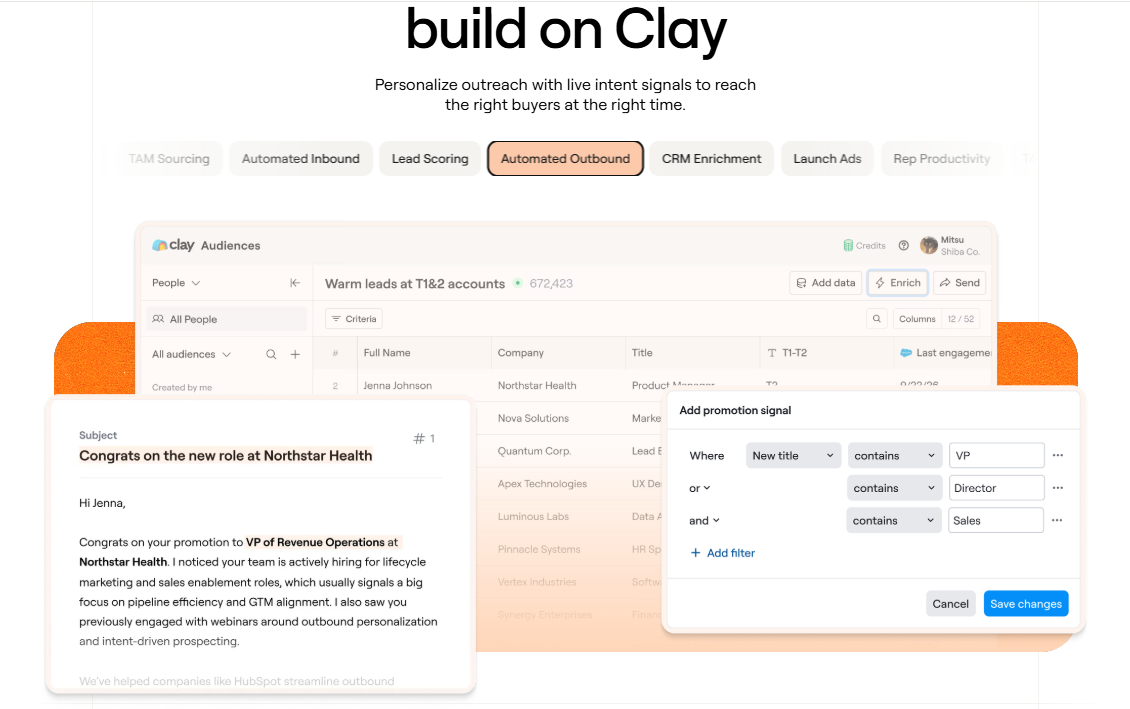
ClayClay has moved from an interesting outbound tool to something genuinely infrastructural in how we build Smart Lead Generation systems for clients. If you are not familiar with it, Clay is a platform that connects data enrichment, AI research, and workflow automation into a single environment for building highly targeted, highly personalised outbound programmes.
We use Clay across our own Smart Lead Generation service and we implement it for clients who are ready to move beyond list-based outbound into something more intelligent.
The way we structure Clay implementations follows a three-step framework we call Capture, Qualify, Activate.
Capture uses a web intent pixel that resolves anonymous site traffic into company-level data, feeding a live account table in Clay in real time. You stop guessing which companies are interested and start knowing.
Qualify runs that account table against the client's actual ICP definition, fund type, vertical, size, geography, regulatory profile, and removes non-fit accounts automatically. The accounts that pass move forward. The ones that do not fall away without anyone having to manually review them.
Activate enriches the surviving accounts down to the right buying committee contacts, then splits into two parallel channels. LinkedIn ABM audiences for paid reach, and sequenced outreach through HeyReach and HubSpot for direct contact. Every sequence goes through a compliance pass before it ships, checked against UK GDPR and PECR requirements.
The result is a system that runs continuously, improves as it learns which signals predict conversion, and removes the manual prospecting work that consumes sales team time without producing proportionate pipeline.
Clay's recent product announcements, covered in detail on this blog by Chris Smith, suggest the platform is moving significantly further in this direction. Account Agents that reason across CRM data, call transcripts, and enrichment data to produce prioritised next actions with a visible audit trail. Visual workflow building that supports code nodes for deterministic logic. A self-improving revenue engine is not hyperbole at this point. It is a description of where the product is heading and what we are already building towards for clients.
 LinkedIn Sales Navigator and HeyReach
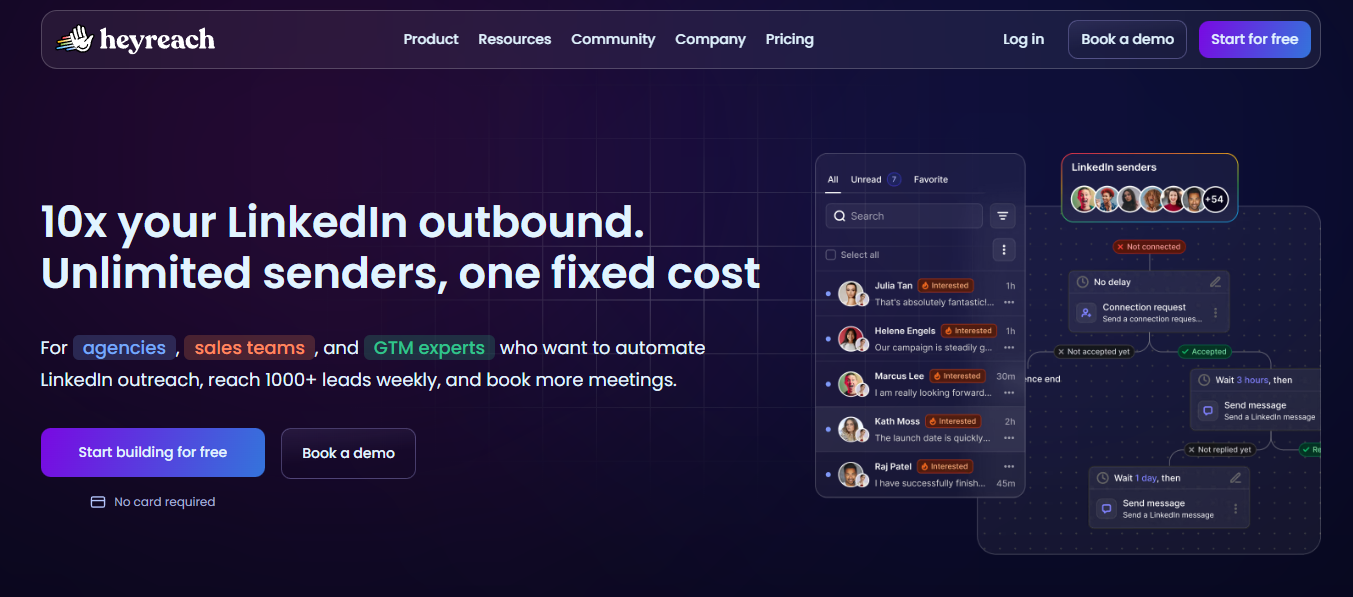
These two platforms sit at the outbound execution layer of most Smart Lead Generation builds and are worth addressing together because they work as a pair rather than independently.
LinkedIn Sales Navigator provides the targeting and research infrastructure. Account and contact lists built to precise ICP specifications, intent signals from profile activity and engagement, and the relationship intelligence that makes personalised outreach credible rather than generic.
HeyReach sits on top of Sales Navigator and handles the sequencing. It is built specifically for LinkedIn outreach at scale, with safety limits and rotation logic that prevent the account restrictions LinkedIn imposes on aggressive volume-based outreach. For financial services firms where a single senior relationship can be worth six or seven figures, protecting the LinkedIn account health of your commercial team is not a minor consideration.
Together they handle the direct outreach channel of the Activate phase described above, while the enrichment data from Clay ensures every message has the context to be genuinely relevant rather than templated.
 Semrush
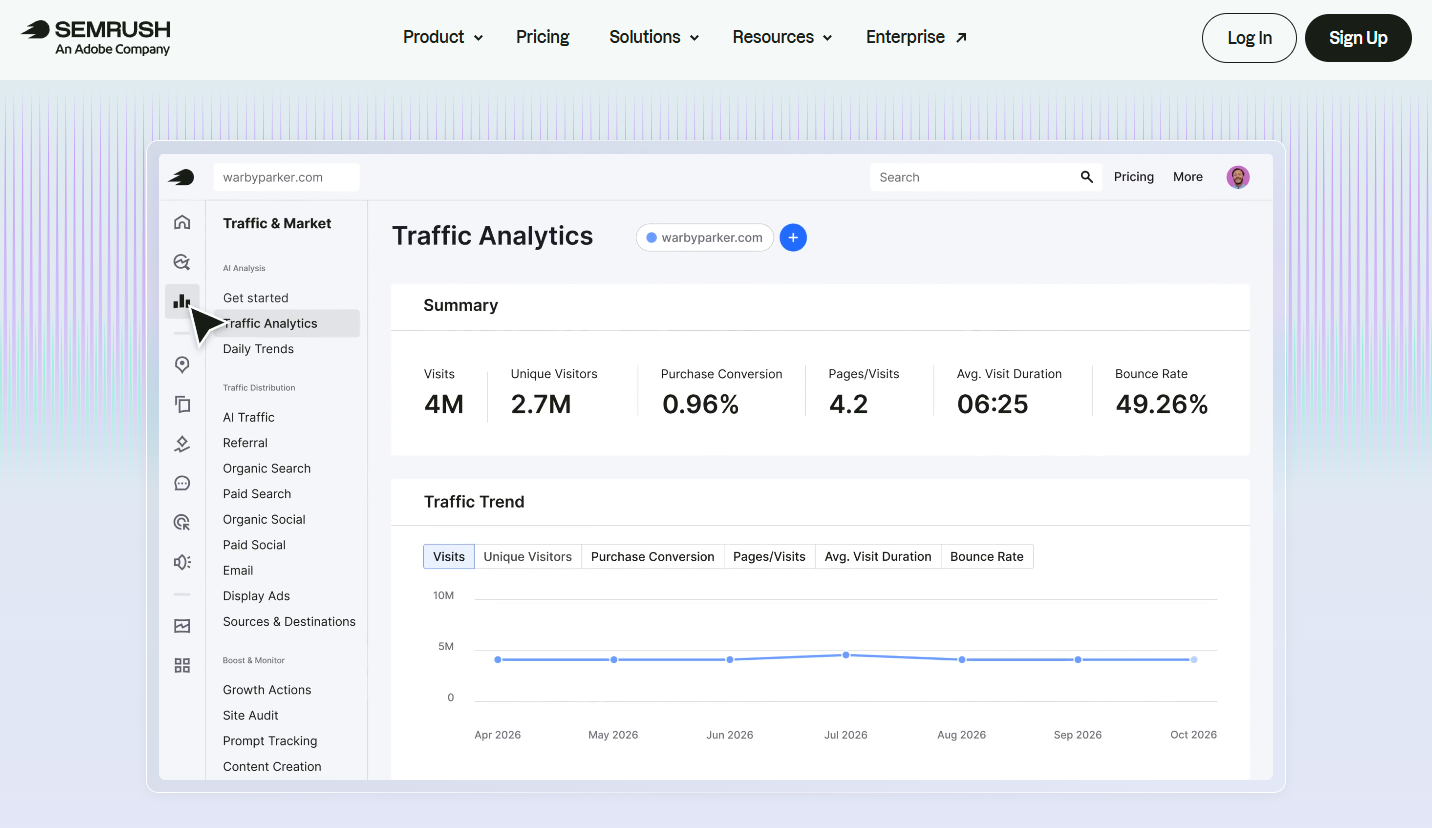
Semrush sits at the research and intelligence layer of our SEO and AEO work. Before we build a content strategy, an AI search optimisation programme, or a paid search campaign for a financial services client, we use Semrush to map the competitive landscape, identify the keyword and topic clusters where the client has the most realistic opportunity to build authority, and benchmark their current visibility against sector peers.
For AEO specifically, Semrush's position tracking and content gap analysis tools help us identify which questions and topics AI search tools are drawing on most frequently within financial services and FinTech. That intelligence shapes both the blog content strategy and the technical optimisation work we carry out on client sites.
It is not a platform we implement for clients in the same way we implement HubSpot or Clay. It is the research infrastructure that informs everything else.
 ClickUp
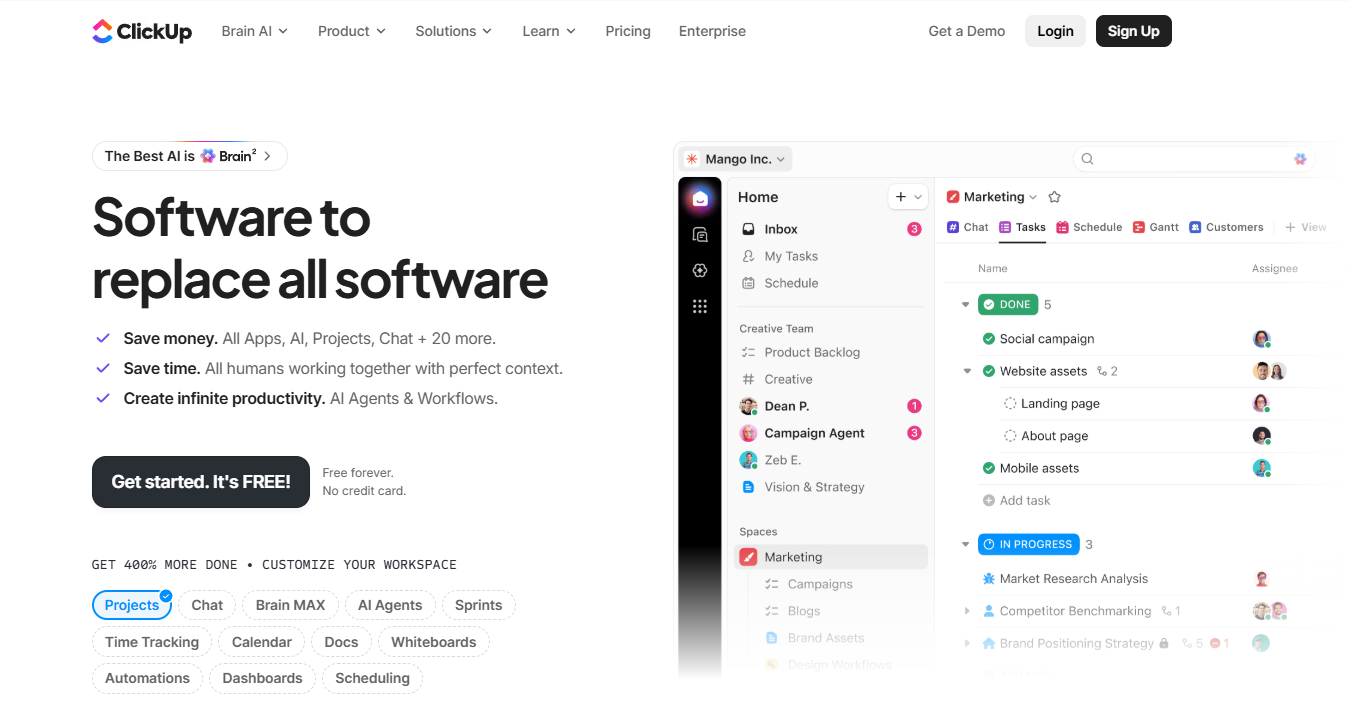
ClickUp is our project management and operational delivery platform, and we implement it for clients who need to bring structure to how their commercial and operational teams work.
For a financial services or FinTech firm scaling quickly, the absence of a proper project management infrastructure is one of the most common sources of operational friction. Work happens across email threads, Slack messages, and shared documents with no single source of truth for what is in progress, what is blocked, and what has been completed. Onboarding a new team member takes weeks longer than it should because the process knowledge lives in people's heads rather than in a system.
ClickUp implementations we deliver typically cover commercial operations, client onboarding workflows, internal project delivery, and content or campaign management. The goal is always the same. A system where work is visible, accountable, and does not depend on any single person to keep it moving.
 Slack
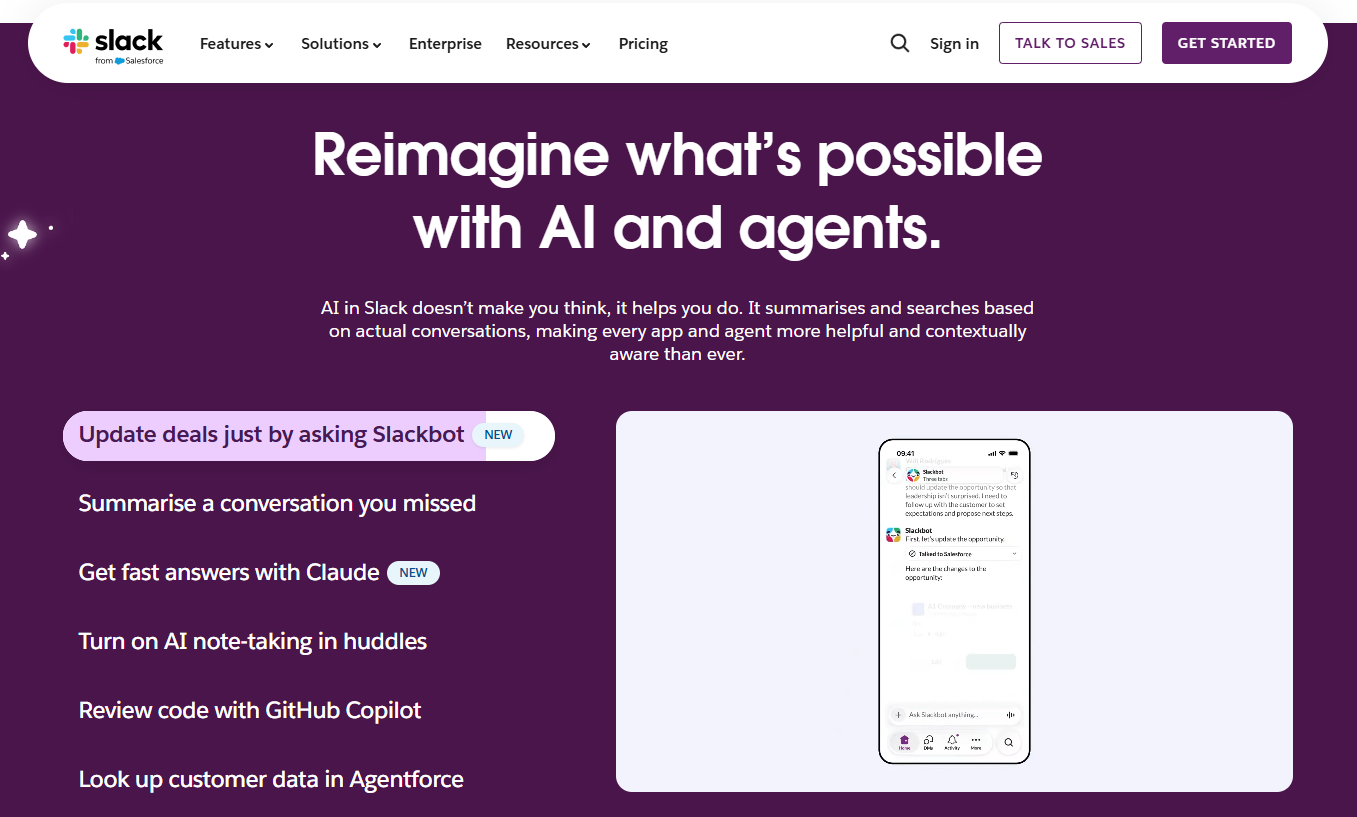
SlackSlack is the connective tissue in most of the technology stacks we build. It sits between the other platforms and surfaces the signals that matter to the right people at the right moment.
A CRM that creates a deal in HubSpot triggers a Slack notification to the relevant squad lead. A Clay workflow that identifies a high-intent account triggers an alert to the sales team with the enrichment data already attached. A ClickUp task that is approaching its deadline surfaces in the relevant channel rather than sitting unnoticed in a project board nobody checked.
We build native integrations and custom workflows that connect these platforms in ways the client's team can understand, maintain, and adapt as the business changes. Whether that is through HubSpot's native workflow tools, a direct API integration, or a lightweight Zapier automation for a simple stable connection, the right choice depends on the complexity and how much operational ownership the client needs to maintain. The automation should serve the humans running the system, not create a dependency on whoever originally built it.
 Google Sheets and Apps Script
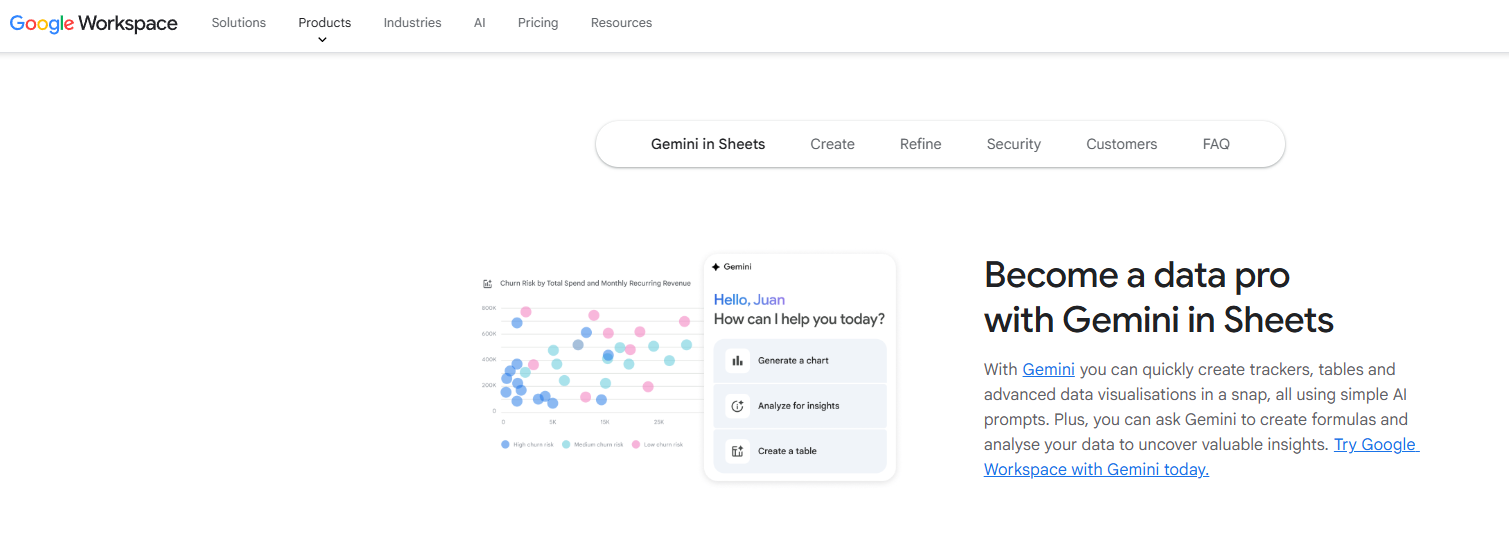
Google Sheets is one of the most underrated tools in our operational stack and worth mentioning specifically because of what Apps Script unlocks.
On the surface, Google Sheets is a spreadsheet. In practice, when combined with Apps Script, Google's JavaScript-based automation layer, it becomes a lightweight but powerful operations tool that can pull data from APIs, automate reporting, trigger notifications, and perform calculations across connected data sources without requiring a full platform build.
We use it internally for operational control and reporting workflows, including our Ops Controller, a custom-built Apps Script powered sheet that aggregates data across multiple sources into a single operational view. For clients it appears most often as a bridge layer, connecting platforms that do not have a native integration and where the use case does not justify a full custom app build. For financial services firms that need a fast, auditable, low-overhead reporting layer while a fuller BI infrastructure is being built, it is frequently the most practical starting point.
It is not glamorous. It is genuinely useful.
Every technology stack we build for a client is different because every client's commercial model, team structure, and growth stage is different. There is no universal right answer to which platforms a financial services firm should use.
What does not change is the approach. We start with the commercial outcome. We work backwards to the process that produces it. We then choose the technology that supports that process, configure it correctly, and make sure the people who depend on it can own and operate it without coming back to us every time something needs to change.
The platforms covered here are some of the ones we build on most frequently because they deliver the best combination of capability, usability, and operational control for the financial services and FinTech firms we work with. That assessment is not permanent. The technology landscape is moving fast, particularly in AI and automation, and the platforms we build on in two years will reflect what we learn between now and then.
If you are evaluating any of the platforms above, considering a migration, or trying to understand whether your current technology stack is actually supporting your commercial objectives or working against them, that is exactly the conversation we have with new clients.
The technology is never the point. The system behind the growth is.
People building systems. Systems building growth.
Related Thinking
Mathew Carter
APP INTEGRATION
Mathew Carter
.png)
PRESS RELEASE

Fran Sánchez